
August 14, 2026
The Day I Realized AI Was Changing My Behavior Without My Permission
Four hours in, my prompts had shrunk to "looks good, next". What that told us about working with AI, and why we built the feedback loop for ourselves first.


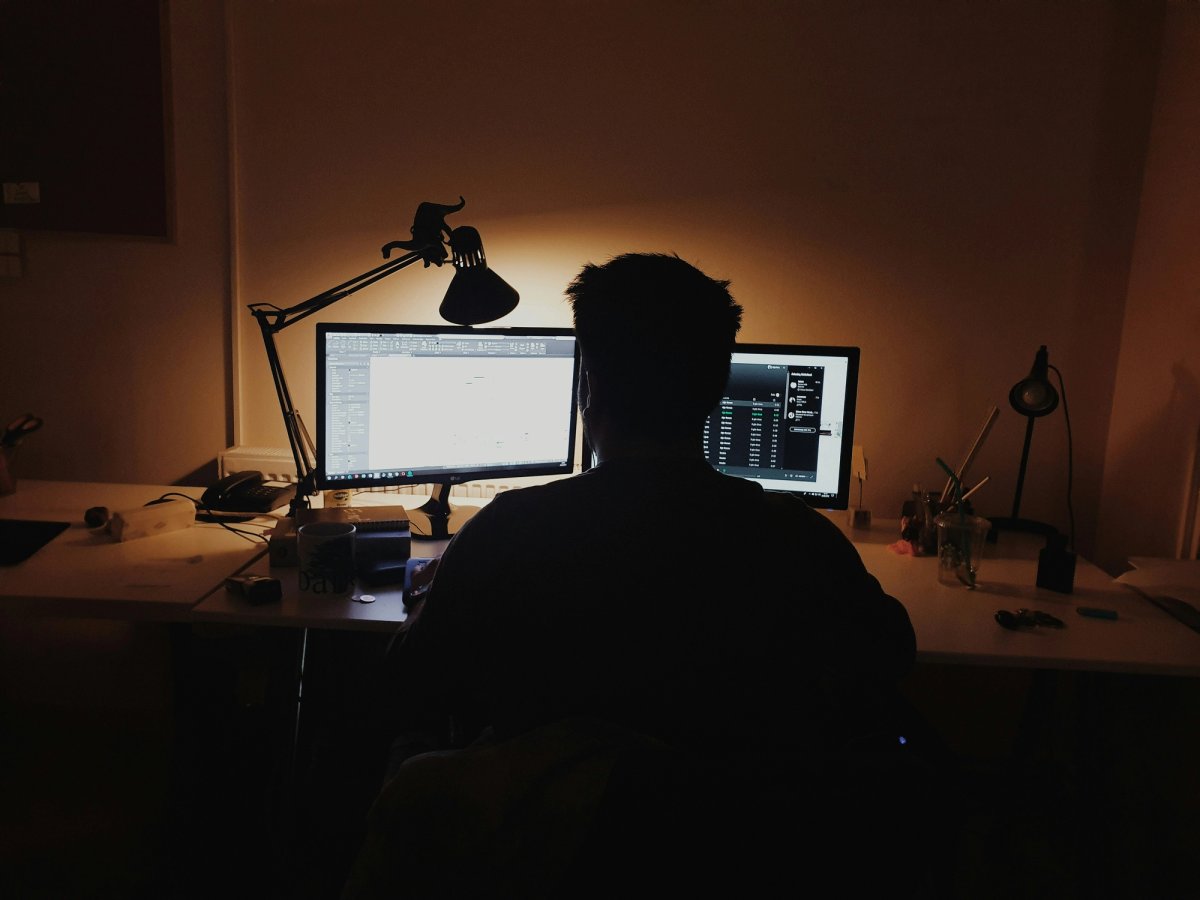
A few months ago, late on a Saturday night, I caught myself doing something uncomfortable.
I had spent four hours in front of a terminal, passing architecture decisions back and forth with an AI model. On the surface, I was moving faster than ever. Code was getting written. Prototypes were running.
Then I stopped and scrolled back through my prompt history.
Somewhere between the first hour and the fourth, my inputs had changed. In the beginning, I was asking precise, demanding questions. I was challenging assumptions and rejecting sloppy shortcuts. By hour four, my prompts had shrunk to lazy approvals: "looks good, next" and "continue."
My co-founder Shishir and I noticed this pattern while building our previous product iterations. We were using AI models daily, and they were undeniably fast. But the subtle psychological drift was troubling. Without noticing it, our working habits, our critical thinking, and our standards were bending to match the easiest defaults of the software.
We were adapting to the machine, rather than the machine adapting to us.
In 1967, John Culkin summarized Marshall McLuhan in ten words: "We shape our tools and thereafter our tools shape us."
That dynamic is not new. It happened with the printing press, the automobile, and the spreadsheet. Every tool rewards specific behaviors and discourages others.
Sociologists and philosophers have mapped parts of this cycle for decades. Ian Hacking described the "looping effect" in human behavior: classify a rock and the rock stays the same, but classify a person and that person changes their actions in response. Manfred Max-Neef showed that while fundamental human needs remain constant, the satisfiers we use to meet them constantly shift.
Human work has always followed a four-step loop:
- A need appears. A gap exists between where you are and where you want to be.
- A job begins. You spend your skills, habits, attention, and effort on it.
- A collision happens. Your work collides with luck, market forces, and other people.
- A new standard emerges. What was once exceptional becomes the baseline, which triggers the next need.
For generations, this loop had human friction. When you collaborated with a colleague or a manager, they had limits. They had bad days. They paused to eat and sleep. The influence was reciprocal.

When the other side of the loop is a machine, that balance breaks.
An AI model does not get tired. It interacts with you fifty times a day across every open tab. More importantly, it carries the judgment and training incentives of the company that built it, not your own.
When you hand your critical thinking over to a system that operates at machine scale, you slowly lose the muscle of original judgment. You become an editor of average outputs instead of an author of distinct work.
That realization led us to build Korture Sense.
If every intelligent tool you use changes how you work, the feedback loop cannot belong to an external vendor or an employer dashboard. It has to belong to you.
We built Korture Sense first for our own machines. It acts as an analytical instrument that reads the work we have already done with AI. It measures where we bring active direction, where our critical reasoning stays sharp, and where we risk slipping into passive delegation.
Most importantly, the data stays local. The record belongs to the individual professional, not a central server.
AI access is now a commodity. Anyone can generate competent code, competent analysis, or competent prose with a single click.
The real differentiator is whether your own taste, judgment, and intention remain in command.
When you close your laptop today, take a look at your last ten interactions with AI. Ask yourself a simple question: are you still shaping the tool, or is the tool shaping you?

